Wednesday, 11 September 2019

Preparation for the 1st October 2019 Session

Reading: Josef Pieper, Guide to Thomas Aquinas, chapters XI and XII.


Resultado de imagen para Tomás de AquinoWith these last two chapters we conclude Pieper's book. In a way they are the most important ones because they bring us the best of the author's reflection on the essence of St Thomas's contribution as Doctor communis. 

If it helps your preparation here are two challenges:

(1) Summarise in one paragraph what was, in Pieper's view, St Thomas's "revolutionary" contribution to philosophy, his most significant finding. Is it a philosophical or a theological finding?

(2) Explain in one paragraph the relation between philosophy and theology, including both what they have in common and what distinguishes them from each other. Are they intrinsically compatible or incompatible?

Even if you didn't read other chapters of the book, reading these two will leave you with a gist of its content.


To join our mailing list or for any questions/comments click here.

Thursday, 8 August 2019

Preparation for the 3 September 2019 Session

We will continue our review of the first question of St Thomas Aquinas's Quaestiones disputatae de veritate. For our discussion next Tuesday we will only see the next four articles of

Question One

5. Is some truth besides the First Truth eternal?
8. Is every other truth from the First Truth?

Your preparation for this September session consists of reading carefully these articles. Try to follow the internal logic in each of them. You may find it tiring, but it's worth it: your intellect will be working out in a mental gym.

Remember you can access a vast number of St Thomas's works in English (and Latin) on this site compiled by the Dominicans in United States. Have a look, even if only to see all the works of Aquinas they have in the site.

An additional resource for those interested in deepening on analogy is this article from the Maritain centre at the University of Notre Dame: The Logic of Analogy by Ralph McInerny.

And for those wanting to deepen in the thought of St Thomas from a very reliable and didactic source and in sized bits, here is an excellent, highly recommended and free course offered by the Dominicans in Washington DC: Aquinas 101.


To join our mailing list or for any questions/comments click here.

Wednesday, 7 August 2019

Clarifications to the Discussion on 6 August 2019

Resultado de imagen para analogia entisBackground to the concept of analogy key to understand St Thomas Aquinas:

Analogy stands between equivocality and univocality:

A univocal term has only one possible meaning (no place for confusion, so to speak), eg "entomology".
An equivocal term can mean very different things, for instance "bark" which without any background can equally mean "the outer covering of a tree" or "the short, loud sound made by dogs".
An analogical term is similar (partially the same, partially different) to another.

There were three types of analogy used in the Middle Ages:

1. Analogy of proportionality: for instance "principle" is an analogical term when said of a point and a spring of water because a point is related to a line as a spring is related to a river.

2. Analogy of attribution: eg analogy involved a relation between two things, of which one is primary and the other secondary.

3. Analogy of participation: the most important example here is the analogia entis, the way in which God, an angel, a man, a zebra, a birch and a sapphire "are," though each containing different degrees of being and, in the case of God, being Himself the principle of being, the Ipsum Esse Subsistens.

We could add a fourth one mentioned during our discussion, "improper" analogy or metaphor, ie an analogy in which there is no real basis for similarity. For instance when we say someone is "on fire" we don't mean (hopefully) that flames are consuming that person's clothes, but that he is working or doing something with enthusiasm and energy. Or we can say someone is "a gem" but clearly we don't mean she is a piece of stone, but someone who has lend a very valuable service.

You can read a very nice summary of all these notions by clicking here.


To join our mailing list or for any questions/comments click here.
Friday, 26 July 2019

Preparation for the 6 August 2019 Session

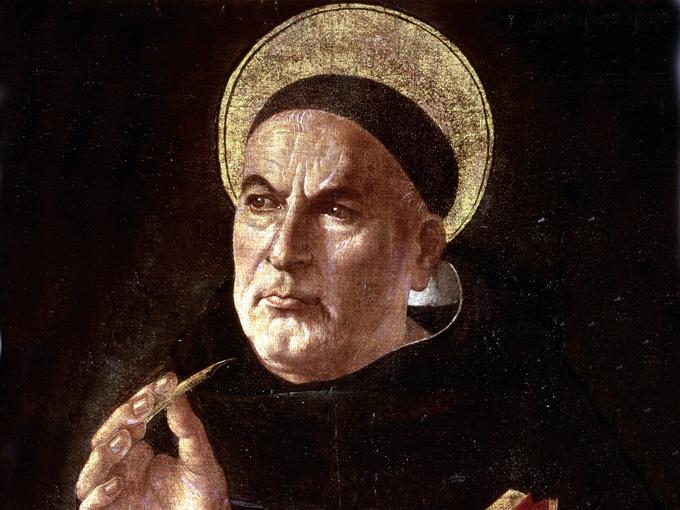
Resultado de imagen para latinReading: Josef Pieper, Guide to Thomas Aquinas, chapters IX and X.

Questions to help your reflexion as you read:

Chapter IX

Was Latin Aquinas's native language?
Was Latin a living or a dead language in the Middle Ages?
When and how did Latin become a "dead language"?
What was the difference between Humanist and Scholastic Latin?
What is the specific kind of Latin Aquinas uses?
What is the main attribute of the language used by St Thomas and his contemporaries?
What is St Thomas's approach to jargon in his academic writing?
How was scholastic Latin distinct from medieval Latin, between St Thomas's and St Agustine's?
What was in practice St Thomas's approach to jargon, artificial and natural language?
How would you compare St Thomas's use of language versus Heidegger and versus (the first) Wittgenstein.
How "objective" or "subjective" is language for Aquinas?
What is the most outstanding trace of St Thomas's style according to Pieper?

Chapter X

What was the challenge that Thomas took as his life task?
Can you explain what Boethius's and Anselm of Canterbury's simplifications were?
How did the problems of "split consciousness" and "double truth" affected the relations of faith and reason at the time St Thomas enters the intellectual scene?
Which of St Thomas's ideas about the living of the Christian life upset the "faith camp" among his contemporaries?
Why was Aquinas's appeal to Aristotle so problematic from the point of view of the "faith camp"?
How does St Thomas define "world" and why is this concept important?
What was the role of purity in the pursuit of truth in St Thomas's life and teaching?
What was the difference between Siger de Brabante's and Aquinas's Aristotelianism?
What were the basic tenets of Latin Averroism and why was it problematic?
Why is St Thomas summoned to the University of Paris for the second time in 1268?
Describe the two intellectual fronts on which St Thomas had to battle during his second stay at the University of Paris and how he went about it.
What were the three main lines of St Thomas's argument to articulate his position?


To join our mailing list or for any questions/comments click here.

Tuesday, 25 June 2019

Preparation for the 2 July 2019 Session

Resultado de imagen para the power of the intellectSt Thomas Aquinas's Quaestiones disputatae de veritate contains 29 questions. For our discussion next Tuesday we will only see the first four articles of question 1.

Question One

1. What is truth?

2. Is truth found principally in the intellect or in things?

3. Is truth only in the intellect joining and separating?

4. Is there only one truth by which all things are true?

As you read through, you will find some terms that may sound more familiar after having read De ente et essentia in April 2019, for instance the concepts of being, essence, accident and others. If you wish to refresh them go to this post.

Your only preparation for this July session consists of reading carefully these articles. Try to follow the internal logic in each of them. You may find it tiring, but it's worth it: your intellect will be working out in a mental gym.

Remember you can access a vast number of St Thomas's works in English (and Latin) on this site compiled by the Dominicans in United States. Have a look, even if only to see all the works of Aquinas they have in the site.


To join our mailing list or for any questions/comments click here.

Wednesday, 5 June 2019

Clarifications after the 4 June 19 session

Resultado de imagen para bible middle ages vulgataWhich version of the Bible was used in the Middle Ages?

The version of the Bible most widely used during the Middle Ages (especially around St Thomas's time) was the Vulgate, that's the short answer. The Vulgate was translated into Latin from the original texts by St Jerome (d. 420). The main reasons why the Vulgate became so widely used were: its clarity of exposition, the fidelity of its translation and its elegance of diction. By the 9th century it had been adopted by most of Christendom as the most authoritative translation. You can read a very good summary of the history of the Vulgate up to the 20th century by clicking on this link.

What exactly was an articulus?

The articulus, explains Pieper on his Guide to Thomas Aquinas, was the smallest building block of the quaestio disputata (and other forms of writing). It typically contained the following parts:
The question under discussion;
the opposing arguments to the idea the author was going to submit;
an idea contradicting the arguments (n. 2);
the thesis, a synthetic statement where the author advances his own reply to the question (n. 1).
a development addressing each of the opposing arguments (n. 2).


For a good example of this check the structure in any of the twelve articles of Question One of Aquinas's De veritate (the reading for our July 2019 session).

Wednesday, 29 May 2019

Preparation for the 7 June Session

Chapters VII and VIII of the Guide to St Thomas describe to us Aquinas's activity in the final years of his life, his late 40s. In addition to the content of his intellectual endeavours, pay attention to the discussion format often referred to in these two chapters: the disputatio, a method of debate which required from participants (1) a commitment to find the truth on a particular matter, (2) a thorough analysis of the opponent's argument, and (3) the advancing of one's own position based on logical and well-grounded reasoning. The second work by St Thomas that we'll start reading and discussing next month (De Veritate) will have this format.

Below are some questions as an optional help for your reading. If your time is limited choose three or four that you find more intriguing or interesting, and add others later.
    escolasticismo
  • Who is that opponent St Thomas argues against the last five years of his life and why would others confuse St Thomas with that opponent?
  • What is, in a few words, the spirit, the essence of the disputatio and how does St Thomas practise it?
  • What were the risks of an ill-understood disputatio spirit (present even as far back as Socrates's time, and even more so during the late Middle-Ages? How does Thomas tackle this problem, for instance at the beginning of his Summa theologiae?
  • What is the role and importance of the articulus within the disputatio?
  • What was the difference between the quaestiones disputatae and the quaestiones quodlibetales and how did Thomas approach them?
  • Do you agree with the idea that the spirit of the disputatio is at the core of what a university should be about, as Thomas seems to have believed?
  • Among the many roles he had to fulfill in his life, what was the one that Thomas had most at heart up to the end?
  • What was the historic and nearly impossible task Urban IV assigned Thomas which regarded all Christendom (had you heard about it)?
  • What are the two components in the art of teaching according to St Thomas?
  • What is at the beginning of philosophising or any other kind of knowledge?
  • What kind of argumentation does Thomas use in his Summa contra gentiles?

    El amor como sentido del hombre en Carlos Cardona

    Prefacio El presente estudio tiene como propósito presentar a un pensador que murió hace apenas doce años, y que por varios motivos pudiera ...