Tuesday, 24 December 2019

Happy Christmas 2019

In the beginning was the Word, and the Word was with God, and the Word was God. He was in the beginning with God; all things were made through him, and without him was not anything made that was made. In him was life, and the life was the light of men... And the Word became flesh and dwelt among us, full of grace and truth... (Jn 1:1-14)


Imagen relacionada
Underlying all the Church's thinking is the awareness that she is the bearer of a message which has its origin in God himself (cf. 2 Cor 4:1-2). The knowledge which the Church offers to man has its origin not in any speculation of her own, however sublime, but in the word of God which she has received in faith (cf. 1 Th 2:13). At the origin of our life of faith there is an encounter, unique in kind, which discloses a mystery hidden for long ages (cf. 1 Cor 2:7; Rom 16:25-26) but which is now revealed: “In his goodness and wisdom, God chose to reveal himself and to make known to us the hidden purpose of his will (cf. Eph 1:9), by which, through Christ, the Word made flesh, man has access to the Father in the Holy Spirit and comes to share in the divine nature”... This initiative is utterly gratuitous, moving from God to men and women in order to bring them to salvation. As the source of love, God desires to make himself known; and the knowledge which the human being has of God perfects all that the human mind can know of the meaning of life. (St John Paul II, Fides et ratio, 7)

Two beautiful and insightful passages to immerse our minds and hearts with in the meaning of our Christmas celebration. May this be a time of joy, peace, and hope for you and all those around you. 

And for those eager to include Faith and Reason in their summer reading list, below are three suggestions:

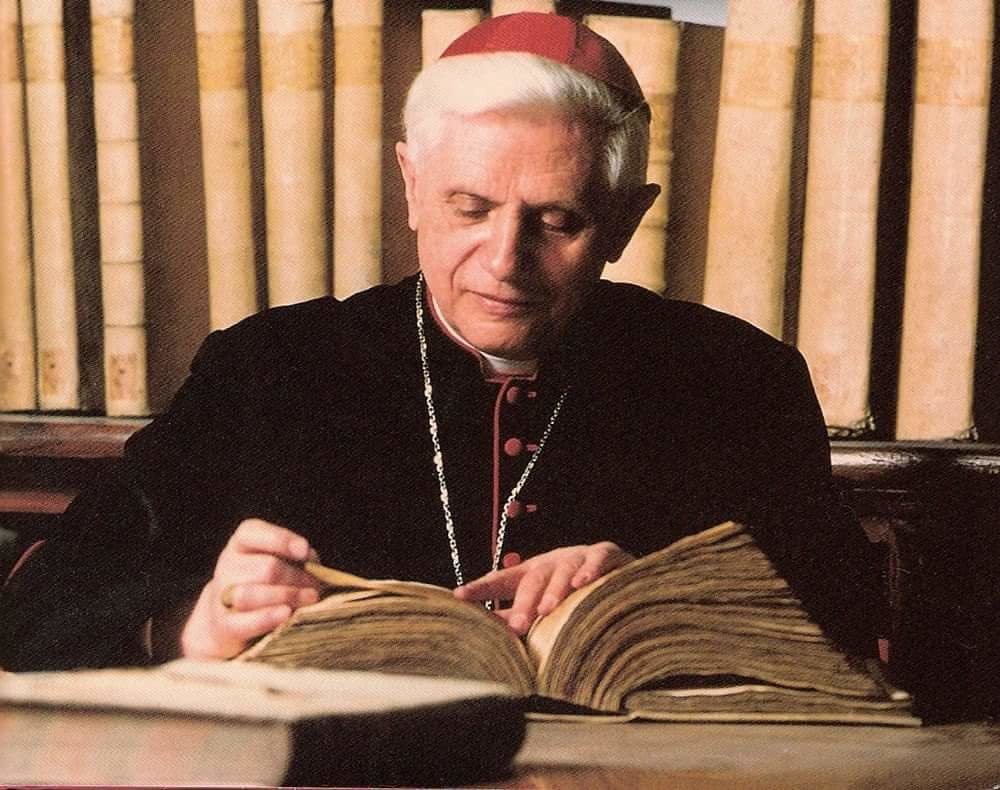
Resultado de imagen para faith and reason joseph ratzinger


(1) Faith and Reason according to Benedict XVI, free ebook available by clicking here.


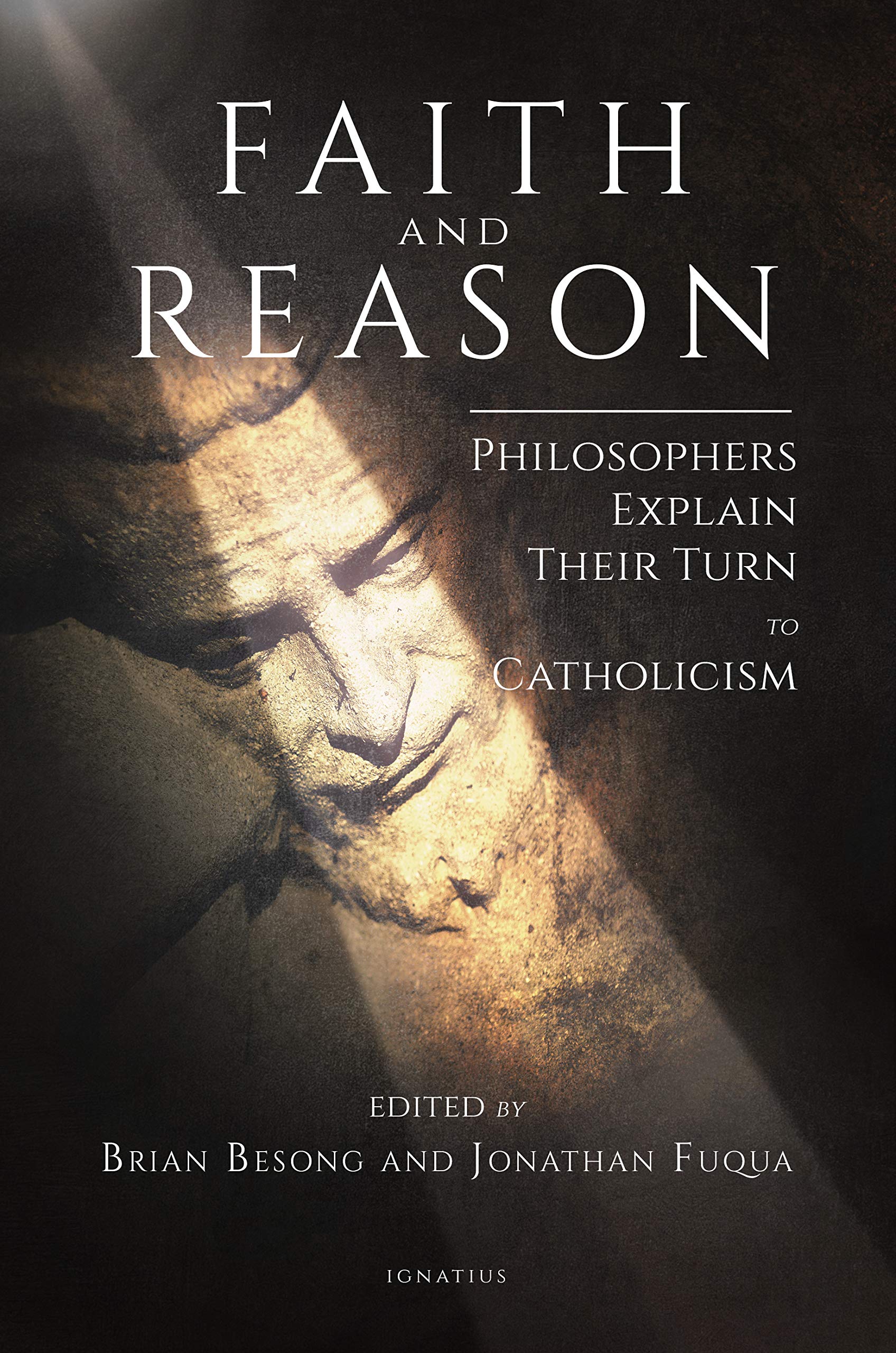
Resultado de imagen para besong fuqua


(2) Faith and Reason: Philosophers Explain their Turn to Catholicism, Besong & Fuqua (eds.), Ignatius 2019. Paper or kindle editions available by clicking here.
For Love of Wisdom


(3) For the Love of Wisdom: Essays on the Nature of Philosophy, Josef Pieper, Ignatius 2011. Paper edition available by clicking here.


To join our mailing list or for any questions/comments click here.

Monday, 7 October 2019

Preparation for the 5 November Session

Our readings will be the last four articles of De veritate, Question 1:


Resultado de imagen para quaestiones disputatae de veritateIf you are not very familiar with this kind of material and have to decide between trying to  understanding very well only part of the reading or doing the whole reading without understanding it completely, go for the second option. You'll be able to deepen once you have the whole picture and have learned the meaning of key terms. 
Some concepts that regard the process of knowing in Aquinas's perspective may result useful, here is a glossary and summary explanation in lay terms as an introduction:
  • Particular senses: what we call the external or "five senses": sight, smell, etc.
  • Common sense: the "central" sensitive faculty that allows us to distinguish sensorial information coming from the "particular senses" in the same perception (eg sweet from blue or noisy from bitter). 
  • Cogitative power: a bridge between of our senses and the intellect. The equivalent power in animals is the estimative one. It helps us perceive something particular as beneficial or harmful. In animals that knowledge is instinctive, in humans it is "sprinkled" with rationality (eg the urge to run away from fire).
  • Imagination: the internal sense through which we represent to ourselves an object known by the external (particular) senses. 
  • Memory: the internal sense through which we represent to ourselves an object known through the external senses in the past, remembering the circumstances that accompanied that knowledge.   
  • Agent intellect: an "active" part of the intellect (therefore the spiritual faculty) that works on the product of what the external and internal senses have captured. 
  • Passive intellect: a receptive part of the intellect on which the agent intellect produces as conclusion the form of the object known.   
The process described above is called simple apprehension, and its outcome is for us to capture the essence or "quiddity" of the object known.

After the simple apprehension comes judgement, the affirmation or negation of what the object is or is not. For instance that a rabbit is a living being. Several times in the reading you'll find Thomas pointing out that truth or falsity occur in this "judgement" part.  

An example using these concepts:

Resultado de imagen para birch treeI am walking by the lake and as I turn to one side, a few metres away from me, on the grass I perceive some shiny pieces of white and green moving with the wind. I turn my head to see better and I realise they are leaves with a darker colour in the front and a clearer colour under. They are attached to a white trunk. I suddenly remember a similar image outside the house where I grew up. I conclude this is a tree. Simple apprehension so far. Then I think "This is a birch". This is a judgement and it can be right or wrong, be true or false. Maybe it is a birch, of a similar kind to the ones I used to see outside my childhood house. Or maybe it is not a birch, it is an aspen tree.

Except for a case in which my senses are defective, eg I don't see colours properly, the simple apprehension is pretty straightforward and I will get "the concept" of the tree in front of me, that's why St Thomas says at this level there is no falsity. It is at the judgement stage that truth or falsity come to the stage. 

You don't have to understand at this stage the whole process of simple apprehension (you may not find it that "simple" after all!). But it is important to see what the process is like, what the terms mean and how that relates to the truth / falsity discussion in the last four numbers of Question 1 De veritate.  


To join our mailing list or for any questions/comments click here.


Wednesday, 2 October 2019

F&R 2020 Program

Resultado de imagen para disputations middle agesCourse theme: The Church and Philosophy.

Description: Become acquainted with the Church’s perspective on faith and reason and the role philosophy plays in that regard. The "research question" guiding our readings and discussions throughout the year will be whether a "Christian philosophy" is definable, possible and desirable.

Readings: Four papal documents that have treated this topic at some length, all of them available online for free (click on the hyperlinks to access them). Additional material suggested by F&R members and pertinent to the discussion may be added as optional.

Readings:

Aeterni Patris, Leo XIII, 1879.

Studiorum ducem, Pius XI, 1923.

Lumen Ecclesiae, Paul VI, 1974.

Fides et ratio, John Paul II, 1998.

Calendar:

4 February - Aeterni Patris, paragraphs 1-16.

3 March - Aeterni Patris, 17-34.

7 April - Studiorum ducem, 1-15.

5 May - Studiorum ducem, 16-32.

2 June - Lumen Ecclesiae, 1-14.

7 July - Lumen Ecclesiae, 15-30.

4 August - Fides et ratio, 1-23.

1 September - Fides et ratio, 24-48.

6 October - Fides et ratio, 49-79.

3 November - Fides et ratio, 80-108.

Outcome: F&R members will be able to appreciate the importance of philosophy for their own lives, for their understanding of the world around them and for the holistic integration of what they know by faith, through study and life experience. Participants will become more familiar with what the Magisterium has often termed "perennial philosophy" and will be able to contrast it with other philosophical perspectives and systems.


To join our mailing list or for any questions/comments click here.

Highlights and Resources after the 1st October Session

In the October session we reviewed the last two chapters of Guide to St Thomas. Chapter XI argued that St Thomas's most valuable and original contribution to philosophical thought was the discovery of the actus essendi, the action of being or existing, as the innermost feature of all reality, of all what exists. Actus essendi is not one more element in the description of beings, but a distinct element that is not in the essence of anything we know. This actus essendi found in every being is not, however, caused by any of them. Therefore there must be a being whose essence is actus essendi itself, and that's God who in Revelation has spoken about Himself as the one who is.

The most important conclusion from Chapter XII regarded the relationship between Philosophy,  Theology and the sciences in St Thomas's perspective. Both philosophy and theology with the whole of reality as object of study. The sciences study particular segments of reality (physical world--Physics, living beings--Biology, weather--Meteorology, numbers--Mathematics, the governing of cities and states--Politics and so on). Both Philosophy and Theology benefit from the outcomes of scientific research and must take it into account when they judge about the whole of reality. Though neither philosophy nor theology depends for its existence on, or can be proven or disproven by scientific experiments. Philosophy, which relies on reason for its enquiries, benefits from the findings of Theology in the way of a challenge. Theology shows truths from Revelation to which Philosophy must arrive through reasoning (say the existence of God, see above). At the same time Theology benefits from the rigour of philosophical reasoning to ensure it does not jump to mistaken conclusions from the initial point of departure of Revelation (an example could be the rational explanation of the Holy Trinity).


To join our mailing list or for any questions/comments click here.

Wednesday, 11 September 2019

Preparation for the 1st October 2019 Session

Reading: Josef Pieper, Guide to Thomas Aquinas, chapters XI and XII.


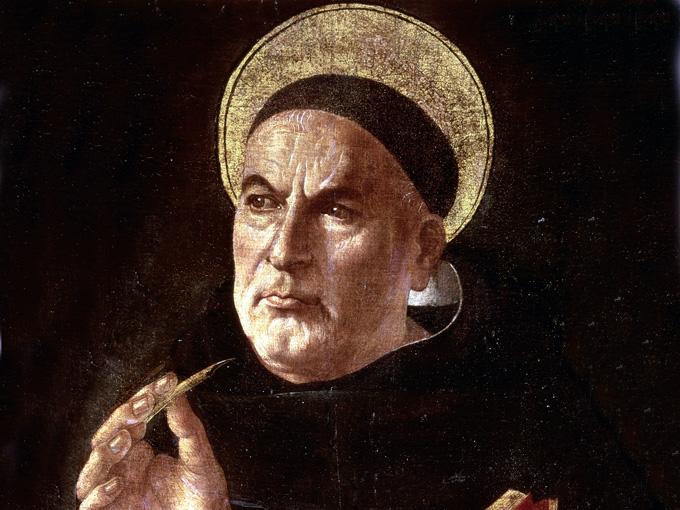
Resultado de imagen para Tomás de AquinoWith these last two chapters we conclude Pieper's book. In a way they are the most important ones because they bring us the best of the author's reflection on the essence of St Thomas's contribution as Doctor communis. 

If it helps your preparation here are two challenges:

(1) Summarise in one paragraph what was, in Pieper's view, St Thomas's "revolutionary" contribution to philosophy, his most significant finding. Is it a philosophical or a theological finding?

(2) Explain in one paragraph the relation between philosophy and theology, including both what they have in common and what distinguishes them from each other. Are they intrinsically compatible or incompatible?

Even if you didn't read other chapters of the book, reading these two will leave you with a gist of its content.


To join our mailing list or for any questions/comments click here.

Thursday, 8 August 2019

Preparation for the 3 September 2019 Session

We will continue our review of the first question of St Thomas Aquinas's Quaestiones disputatae de veritate. For our discussion next Tuesday we will only see the next four articles of

Question One

5. Is some truth besides the First Truth eternal?
8. Is every other truth from the First Truth?

Your preparation for this September session consists of reading carefully these articles. Try to follow the internal logic in each of them. You may find it tiring, but it's worth it: your intellect will be working out in a mental gym.

Remember you can access a vast number of St Thomas's works in English (and Latin) on this site compiled by the Dominicans in United States. Have a look, even if only to see all the works of Aquinas they have in the site.

An additional resource for those interested in deepening on analogy is this article from the Maritain centre at the University of Notre Dame: The Logic of Analogy by Ralph McInerny.

And for those wanting to deepen in the thought of St Thomas from a very reliable and didactic source and in sized bits, here is an excellent, highly recommended and free course offered by the Dominicans in Washington DC: Aquinas 101.


To join our mailing list or for any questions/comments click here.

Wednesday, 7 August 2019

Clarifications to the Discussion on 6 August 2019

Resultado de imagen para analogia entisBackground to the concept of analogy key to understand St Thomas Aquinas:

Analogy stands between equivocality and univocality:

A univocal term has only one possible meaning (no place for confusion, so to speak), eg "entomology".
An equivocal term can mean very different things, for instance "bark" which without any background can equally mean "the outer covering of a tree" or "the short, loud sound made by dogs".
An analogical term is similar (partially the same, partially different) to another.

There were three types of analogy used in the Middle Ages:

1. Analogy of proportionality: for instance "principle" is an analogical term when said of a point and a spring of water because a point is related to a line as a spring is related to a river.

2. Analogy of attribution: eg analogy involved a relation between two things, of which one is primary and the other secondary.

3. Analogy of participation: the most important example here is the analogia entis, the way in which God, an angel, a man, a zebra, a birch and a sapphire "are," though each containing different degrees of being and, in the case of God, being Himself the principle of being, the Ipsum Esse Subsistens.

We could add a fourth one mentioned during our discussion, "improper" analogy or metaphor, ie an analogy in which there is no real basis for similarity. For instance when we say someone is "on fire" we don't mean (hopefully) that flames are consuming that person's clothes, but that he is working or doing something with enthusiasm and energy. Or we can say someone is "a gem" but clearly we don't mean she is a piece of stone, but someone who has lend a very valuable service.

You can read a very nice summary of all these notions by clicking here.


To join our mailing list or for any questions/comments click here.

El amor como sentido del hombre en Carlos Cardona

Prefacio El presente estudio tiene como propósito presentar a un pensador que murió hace apenas doce años, y que por varios motivos pudiera ...