Thursday, 13 February 2020

"The Day is Now Far Spent" by Cardinal Sarah and N. Diat - A Comment

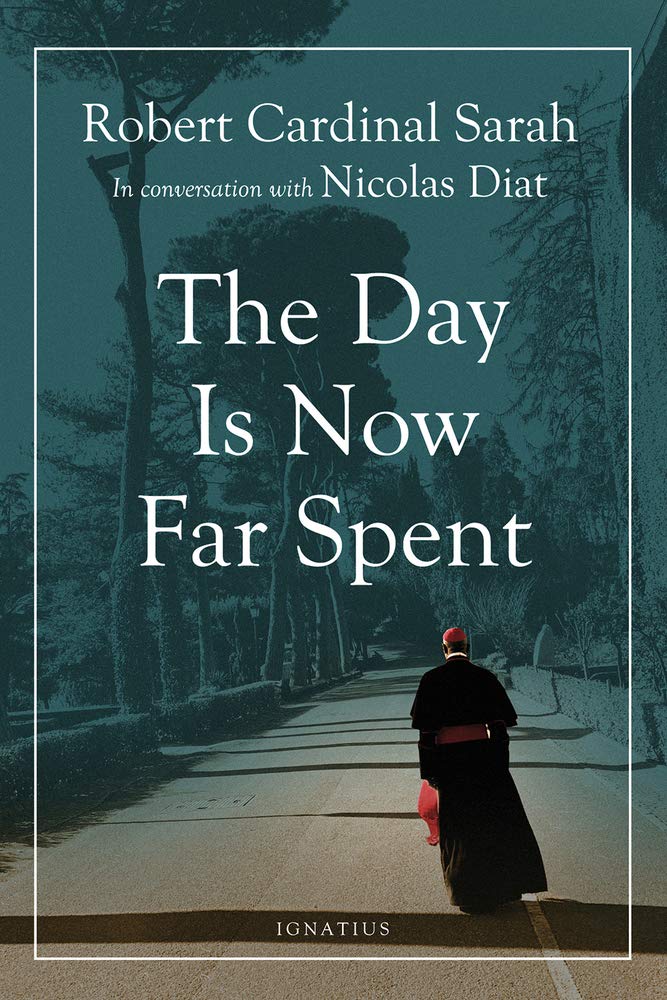
Resultado de imagen para "the day is now far spent"The Day is Now Far Spent was published a few months ago. In it, Guinean Cardinal Robert Sarah, currently Prefect of the Congregation of Divine Worship, gives his reading of the situation of the worldespecially the Westand the Catholic Church today.

You can find the book in paper and kindle editions as well as on audio. There are several excellent reviews of the book such as this one,  as well as this excellent introduction by the interviewer-interlocutor of the book, Nicolas Diat.

The title is based on Lk 24:13-35 which you can read in full here:

[...]While they were talking and discussing together, Jesus himself drew near and went with them. But their eyes were kept from recognising him. And he said to them, “What is this conversation which you are holding with each other as you walk?” And they stood still, looking sad. Then one of them, named Cle′opas, answered him, “Are you the only visitor to Jerusalem who does not know the things that have happened there in these days?” And he said to them, “What things?” And they said to him, “Concerning Jesus of Nazareth, who was a prophet mighty in deed and word before God and all the people, and how our chief priests and rulers delivered him up to be condemned to death, and crucified him. But we had hoped that he was the one to redeem Israel... And he said to them, “O foolish men, and slow of heart to believe all that the prophets have spoken! Was it not necessary that the Christ should suffer these things and enter into his glory?” And beginning with Moses and all the prophets, he interpreted to them in all the scriptures the things concerning himself. So they drew near to the village to which they were going. He appeared to be going further, but they constrained him, saying, “Stay with us, for it is toward evening and the day is now far spent”[...]

Cardinal Sarah speaks about the crises afflicting faith, priesthood, the Church and the West on a larger scale. He speaks about life, religious freedom, the family, liberal democracy, from an unusual perspective for Western readers, a viewpoint which is both hopeful and daring, straightforward and deep. For instance when asked what the most needed virtue for our times is, he responds by pointing out to the virtue of religion—the sense of the sacred. 

The book is not a structured development of topics in a logical order, but follows an informal, conversational style. However it is insightful, and remarkable in the way it uses faith and reason together to approach each of the topics.

The Day is Now Far Spent is a frank reading of a complex, structural crisis affecting the West and its sphere of influence. It is, at the same time, a fresh breath of hope solidly grounded on Scripture, Tradition and Magisterium—the key elements of the Catholic worldviewfor anyone prepared to take it in. Definitely worth reading.


To join our mailing list or for any questions/comments click here.
Friday, 7 February 2020

Good Models of F&R in Action

There is an uninterrupted stream of great thinkers from the beginnings of Christianity used "reason"—rational arguments, human wisdom, philosophy—to understand, deepen, explain or even defend their belief in Christian revelation—"faith".

So this in article we are not interested as much in a clear cut disciplinary distinction between, for instance philosophers, theologians or literary writers, as we are in the use of faith and reason in the way described above. In other words in how they have accounted for the hope in them (1 Pet 3:15).

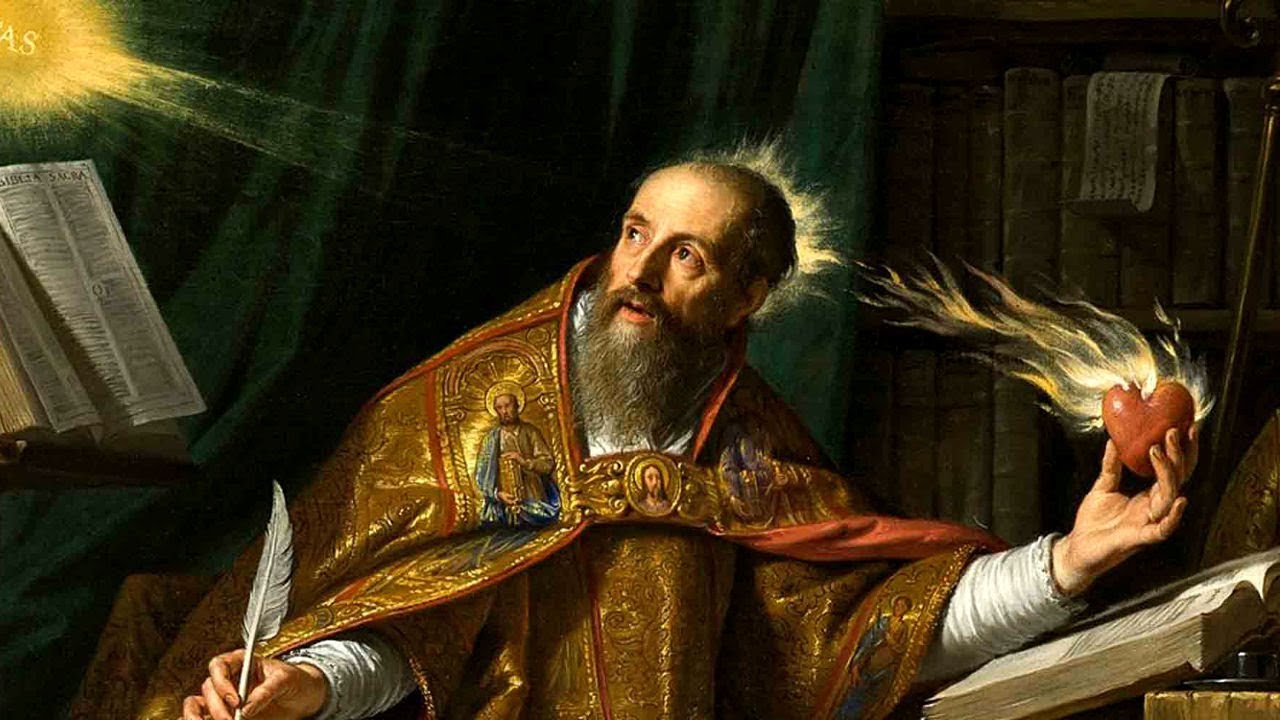
Resultado de imagen para st augustine of hippoIn this tradition two giants stand out right away: St Augustine of Hippo and St Thomas Aquinas. They are not the only models by far, and they are not opposed to each other, as Thomas, who is posterior assumes Augustine in his own thinking though sometimes reaching a different perspective. Philosophically Augustine relies more on Plato, whereas Thomas, without ignoring Plato draws much more from Aristotle's works just made available during Aquinas's life. There might even be an "temperamental affinity" between Augustine and Plato on the one hand, and Thomas and Aristotle on the other.

Resultado de imagen para st thomas aquinasTo be sure there are, before and after Augustine and Thomas, many great and original Christian thinkers up to this day who continue to give reasons for their faith. But in a way the two giants are so important that it is impossible to ignore them, and consciously or unconsciously to lean more towards one of them or the other.

There is abundant literature about both of them, and the challenge is not to find information but to discern it. Here the criterion used for this selection follows the goal outlined in the initial paragraph, at an introductory level.

With that in mind, here is a recent and short article about St Augustine. If you wish to approach one of his many works check this English translation of De Civitate Dei ("The city of God"). Try for instance reading Book 8 or Book 19.

For St Thomas read this also short and recent article. One of his works that exemplifies this use of reason to account for our faith is the Summa contra Gentiles (roughly a "Compendium against the Errors of Unbelievers". Try reading chapters 2 or 4 to start with.

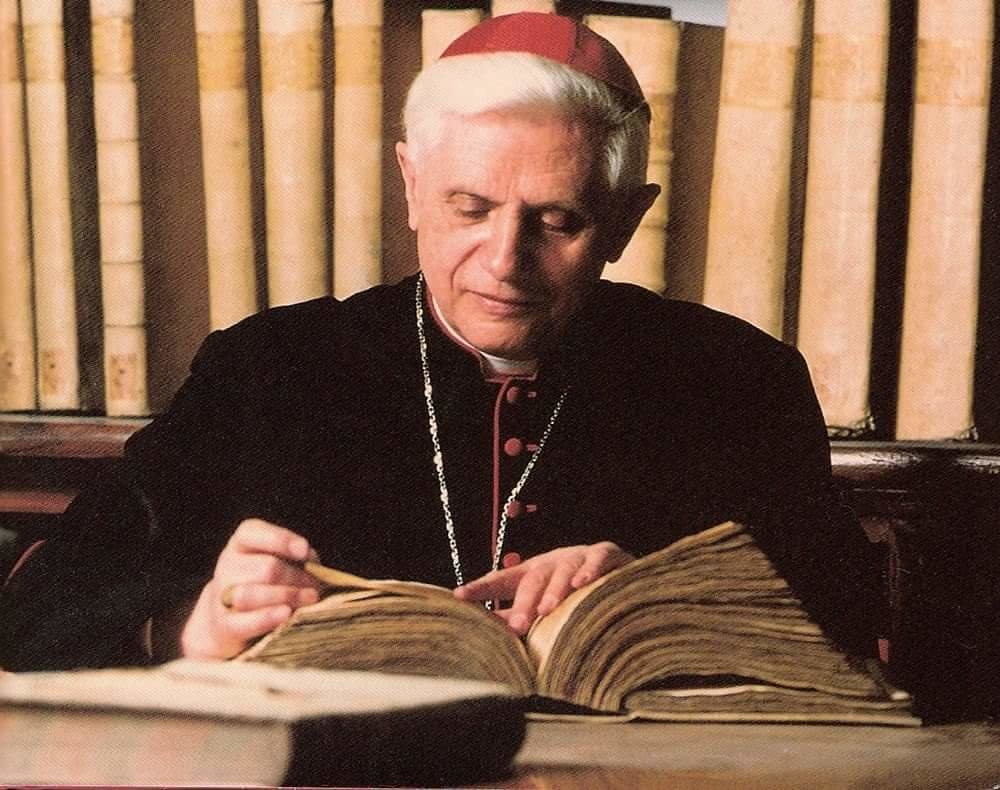
Resultado de imagen para josef ratzingerContemporary models leaning more towards de Augustinian tradition include Josef Ratzinger, theologian, cardinal and eventually Benedict XVI. See this short address of his on faith and reason given at Regensburg. Check this article by Tracey Rowland on him. Cardinal Robert Sarah in his new book "The Day is Now Far Spent" (read a good review here) heavily relies on Ratzinger too. Another very influential Catholic thinker in this same stream might be Saint John Henry Newman, who was recently referred to as "the Augustine of our times".  

Resultado de imagen para karol wojtylaOn the Aquinas side names that immediately come to mind are Josef Pieper (wonderful article about him here), Etienne Gilson (find here a wonderful bio), Jacques Maritain (see bio at a centre that bears his name), Cornelio Fabro (see bio and works on a dedicated website) and Karol Wojtyla, later John Paul II (see an article about his grounding in St Thomas).

These are only a few names, good points of reference for anyone who wishes to harmoniously combine faith and reason. Other examples are Gilbert Keith Chesterton, Clive Staples Lewis, Elizabeth Anscombe and Peter Kreeft.

To join our mailing list or for any questions/comments click here.

Friday, 31 January 2020

Faith & Reason - Purpose of the Blog

Resultado de imagen para faith and reason jp ii"Faith is a gift that we can willingly receive but not earn through our human capacities. The Catechism of the Catholic Church (CCC) explains: "142. By his Revelation, "the invisible God, from the fullness of his love, addresses men as his friends, and moves among them, in order to invite and receive them into his own company." The adequate response to this invitation is faith." And it continues: "141. To obey (from the Latin ob-audire, to "hear or listen to") in faith is to submit freely to the word that has been heard because its truth is guaranteed by God, who is Truth itself."

In the act of faith, "...we, with the aid and inspiration of the grace of God, believe that the things revealed by Him are true, not because the intrinsic truth of the revealed things has been perceived by the natural light of reason, but because of the authority of God Himself who reveals them, who can neither deceive nor be deceived." (Dogmatic Constitution Dei Filius, Chapter 3).

That doesn't mean, however, that faith is contrary to reason. In fact, “even if faith is superior to reason there can never be a true divergence between faith and reason since the same God who reveals the mysteries and bestows the gift of faith has also placed in the human spirit the light of reason. This God could not deny himself, nor could the truth ever contradict the truth” (Dei Filius, ch. 4). 


The Faith and Reason blog aims to contribute to the Catholic Church's "service of the truth" (Encyclical Letter Fides et ratio, 2) at the local level by:


(1) Providing those who do not yet believe but find themselves at the threshold of Catholic faith with rational elements or praeparatio fidei (Fides et ratio, 61) to support their discernment such as arguments for the existence of God or the immortality of the soul. 

(2) Offering Catholics rational resources for them to "always be prepared to make a defence" to anyone who calls them to account for the hope that is in them (1 Pet 3:15). Though philosophy cannot prove (or, for that matter disprove) what God has revealed, it can, however show that it is reasonable to believe it, as happens with the indissolubility of marriage or the existence of angels.


(3) Bridging through philosophy the Catholic worldview based on Holy Scripture, Sacred Tradition and Magisterium of the Church on certain current affairs topics, for instance on liberal democracy, genetic engineering or climate change, and the viewpoints of a lay, wider audience. 


To join our mailing list or for any questions/comments click here.


Monday, 27 January 2020

Preparation for the 4 February 2020 Session

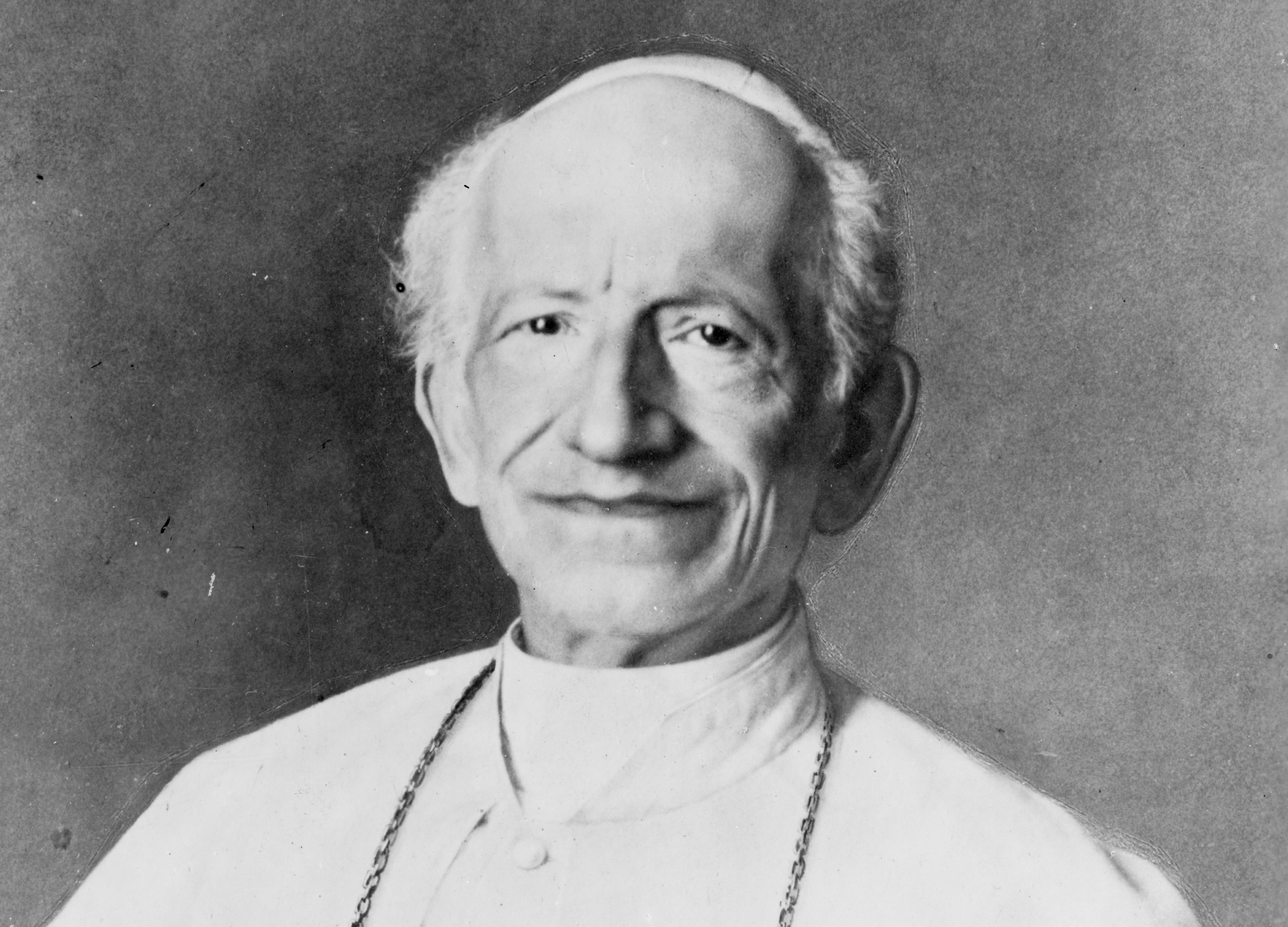
Aeterni Patris is Leo XIII's second encyclical letter, published the second year of his pontificate. For a historical context of the 1870s click here.For some background about the encyclical click here. As a curiosity, click here to see a short video of Leo XIII, the first pope to be filmed. Aeterni Patris is the first papal document in modern times to focus exclusively on the place of philosophy in Catholic life. This is its most remarkable aspect. The mention of St Thomas Aquinas as a point of reference must be seen within this context. Among others including St Augustine and other Fathers of the Church, St Thomas is an outstanding point of reference on the right and smart exercise of philosophy in its three functions: as a preparation for the receiving of faith; as a technical support for the development of theology; and as tool in apologetics. 

Through Pope Leo XIII's encyclical, the Church invites us to consider this challenge: "Those, therefore, who to the study of philosophy unite obedience to the Christian faith, are philosophizing in the best possible way...For surely that is a worthy and most useful exercise of reason when men give their minds to disproving those things which are repugnant to faith and proving the things which conform to faith..." (Aeterni Patris, 9).


To join our mailing list or for any questions/comments click here.

Tuesday, 24 December 2019

Happy Christmas 2019

In the beginning was the Word, and the Word was with God, and the Word was God. He was in the beginning with God; all things were made through him, and without him was not anything made that was made. In him was life, and the life was the light of men... And the Word became flesh and dwelt among us, full of grace and truth... (Jn 1:1-14)


Imagen relacionada
Underlying all the Church's thinking is the awareness that she is the bearer of a message which has its origin in God himself (cf. 2 Cor 4:1-2). The knowledge which the Church offers to man has its origin not in any speculation of her own, however sublime, but in the word of God which she has received in faith (cf. 1 Th 2:13). At the origin of our life of faith there is an encounter, unique in kind, which discloses a mystery hidden for long ages (cf. 1 Cor 2:7; Rom 16:25-26) but which is now revealed: “In his goodness and wisdom, God chose to reveal himself and to make known to us the hidden purpose of his will (cf. Eph 1:9), by which, through Christ, the Word made flesh, man has access to the Father in the Holy Spirit and comes to share in the divine nature”... This initiative is utterly gratuitous, moving from God to men and women in order to bring them to salvation. As the source of love, God desires to make himself known; and the knowledge which the human being has of God perfects all that the human mind can know of the meaning of life. (St John Paul II, Fides et ratio, 7)

Two beautiful and insightful passages to immerse our minds and hearts with in the meaning of our Christmas celebration. May this be a time of joy, peace, and hope for you and all those around you. 

And for those eager to include Faith and Reason in their summer reading list, below are three suggestions:

Resultado de imagen para faith and reason joseph ratzinger


(1) Faith and Reason according to Benedict XVI, free ebook available by clicking here.


Resultado de imagen para besong fuqua


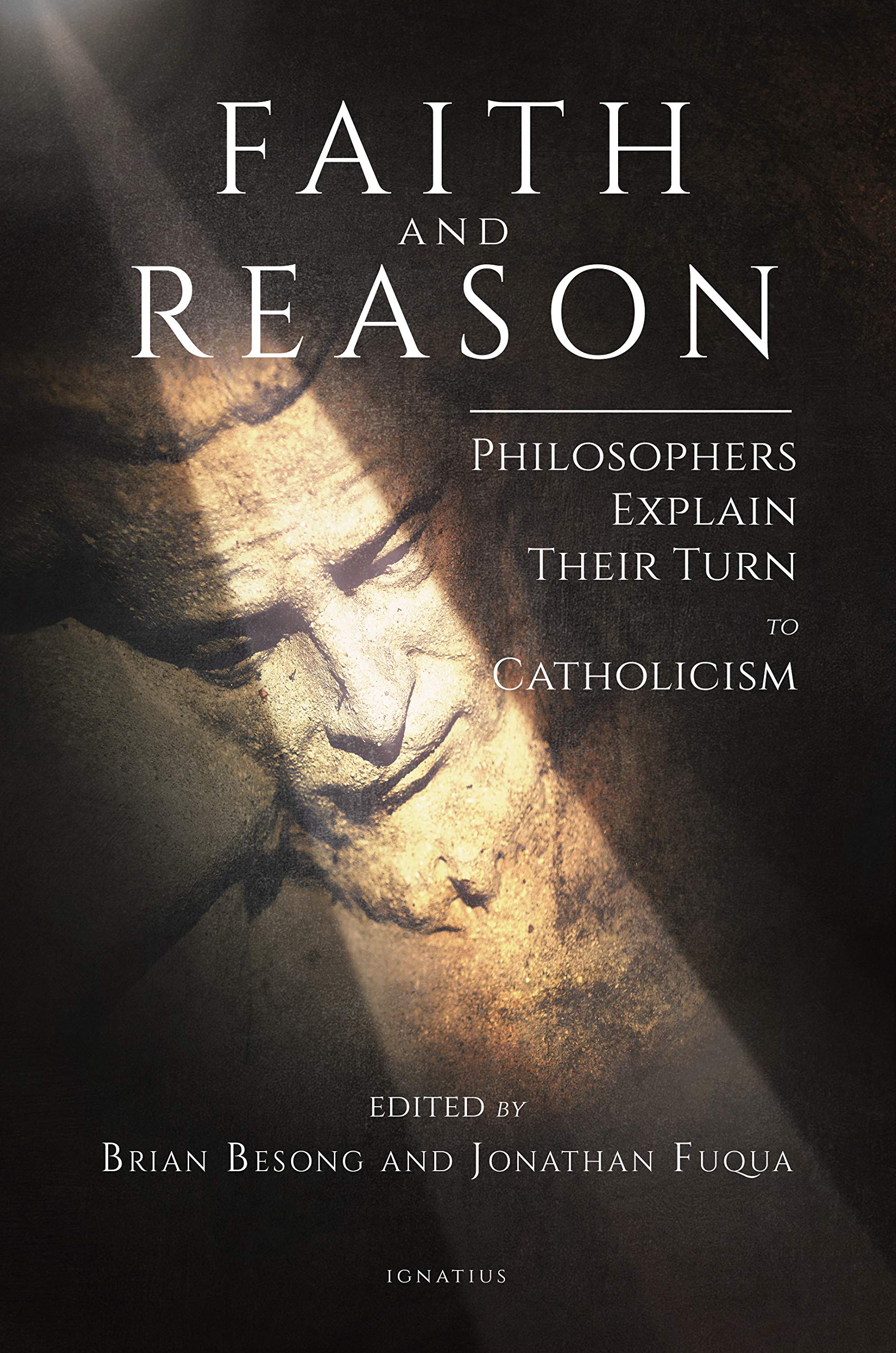
(2) Faith and Reason: Philosophers Explain their Turn to Catholicism, Besong & Fuqua (eds.), Ignatius 2019. Paper or kindle editions available by clicking here.
For Love of Wisdom


(3) For the Love of Wisdom: Essays on the Nature of Philosophy, Josef Pieper, Ignatius 2011. Paper edition available by clicking here.


To join our mailing list or for any questions/comments click here.
Monday, 7 October 2019

Preparation for the 5 November Session

Our readings will be the last four articles of De veritate, Question 1:


Resultado de imagen para quaestiones disputatae de veritateIf you are not very familiar with this kind of material and have to decide between trying to  understanding very well only part of the reading or doing the whole reading without understanding it completely, go for the second option. You'll be able to deepen once you have the whole picture and have learned the meaning of key terms. 
Some concepts that regard the process of knowing in Aquinas's perspective may result useful, here is a glossary and summary explanation in lay terms as an introduction:
  • Particular senses: what we call the external or "five senses": sight, smell, etc.
  • Common sense: the "central" sensitive faculty that allows us to distinguish sensorial information coming from the "particular senses" in the same perception (eg sweet from blue or noisy from bitter). 
  • Cogitative power: a bridge between of our senses and the intellect. The equivalent power in animals is the estimative one. It helps us perceive something particular as beneficial or harmful. In animals that knowledge is instinctive, in humans it is "sprinkled" with rationality (eg the urge to run away from fire).
  • Imagination: the internal sense through which we represent to ourselves an object known by the external (particular) senses. 
  • Memory: the internal sense through which we represent to ourselves an object known through the external senses in the past, remembering the circumstances that accompanied that knowledge.   
  • Agent intellect: an "active" part of the intellect (therefore the spiritual faculty) that works on the product of what the external and internal senses have captured. 
  • Passive intellect: a receptive part of the intellect on which the agent intellect produces as conclusion the form of the object known.   
The process described above is called simple apprehension, and its outcome is for us to capture the essence or "quiddity" of the object known.

After the simple apprehension comes judgement, the affirmation or negation of what the object is or is not. For instance that a rabbit is a living being. Several times in the reading you'll find Thomas pointing out that truth or falsity occur in this "judgement" part.  

An example using these concepts:

Resultado de imagen para birch treeI am walking by the lake and as I turn to one side, a few metres away from me, on the grass I perceive some shiny pieces of white and green moving with the wind. I turn my head to see better and I realise they are leaves with a darker colour in the front and a clearer colour under. They are attached to a white trunk. I suddenly remember a similar image outside the house where I grew up. I conclude this is a tree. Simple apprehension so far. Then I think "This is a birch". This is a judgement and it can be right or wrong, be true or false. Maybe it is a birch, of a similar kind to the ones I used to see outside my childhood house. Or maybe it is not a birch, it is an aspen tree.

Except for a case in which my senses are defective, eg I don't see colours properly, the simple apprehension is pretty straightforward and I will get "the concept" of the tree in front of me, that's why St Thomas says at this level there is no falsity. It is at the judgement stage that truth or falsity come to the stage. 

You don't have to understand at this stage the whole process of simple apprehension (you may not find it that "simple" after all!). But it is important to see what the process is like, what the terms mean and how that relates to the truth / falsity discussion in the last four numbers of Question 1 De veritate.  


To join our mailing list or for any questions/comments click here.


Wednesday, 2 October 2019

F&R 2020 Program

Resultado de imagen para disputations middle agesCourse theme: The Church and Philosophy.

Description: Become acquainted with the Church’s perspective on faith and reason and the role philosophy plays in that regard. The "research question" guiding our readings and discussions throughout the year will be whether a "Christian philosophy" is definable, possible and desirable.

Readings: Four papal documents that have treated this topic at some length, all of them available online for free (click on the hyperlinks to access them). Additional material suggested by F&R members and pertinent to the discussion may be added as optional.

Readings:

Aeterni Patris, Leo XIII, 1879.

Studiorum ducem, Pius XI, 1923.

Lumen Ecclesiae, Paul VI, 1974.

Fides et ratio, John Paul II, 1998.

Calendar:

4 February - Aeterni Patris, paragraphs 1-16.

3 March - Aeterni Patris, 17-34.

7 April - Studiorum ducem, 1-15.

5 May - Studiorum ducem, 16-32.

2 June - Lumen Ecclesiae, 1-14.

7 July - Lumen Ecclesiae, 15-30.

4 August - Fides et ratio, 1-23.

1 September - Fides et ratio, 24-48.

6 October - Fides et ratio, 49-79.

3 November - Fides et ratio, 80-108.

Outcome: F&R members will be able to appreciate the importance of philosophy for their own lives, for their understanding of the world around them and for the holistic integration of what they know by faith, through study and life experience. Participants will become more familiar with what the Magisterium has often termed "perennial philosophy" and will be able to contrast it with other philosophical perspectives and systems.


To join our mailing list or for any questions/comments click here.
El amor como sentido del hombre en Carlos Cardona

Prefacio El presente estudio tiene como propósito presentar a un pensador que murió hace apenas doce años, y que por varios motivos pudiera ...